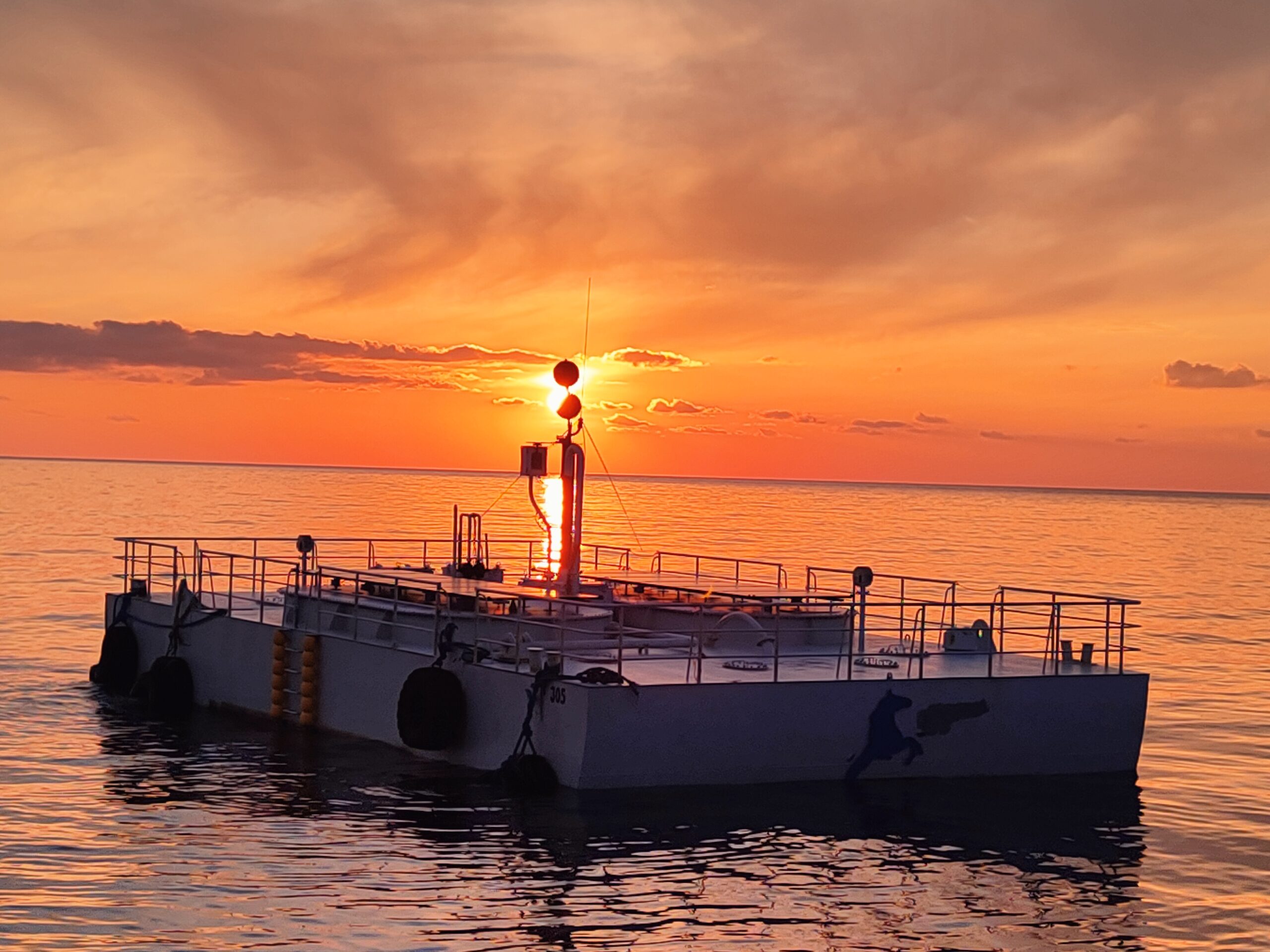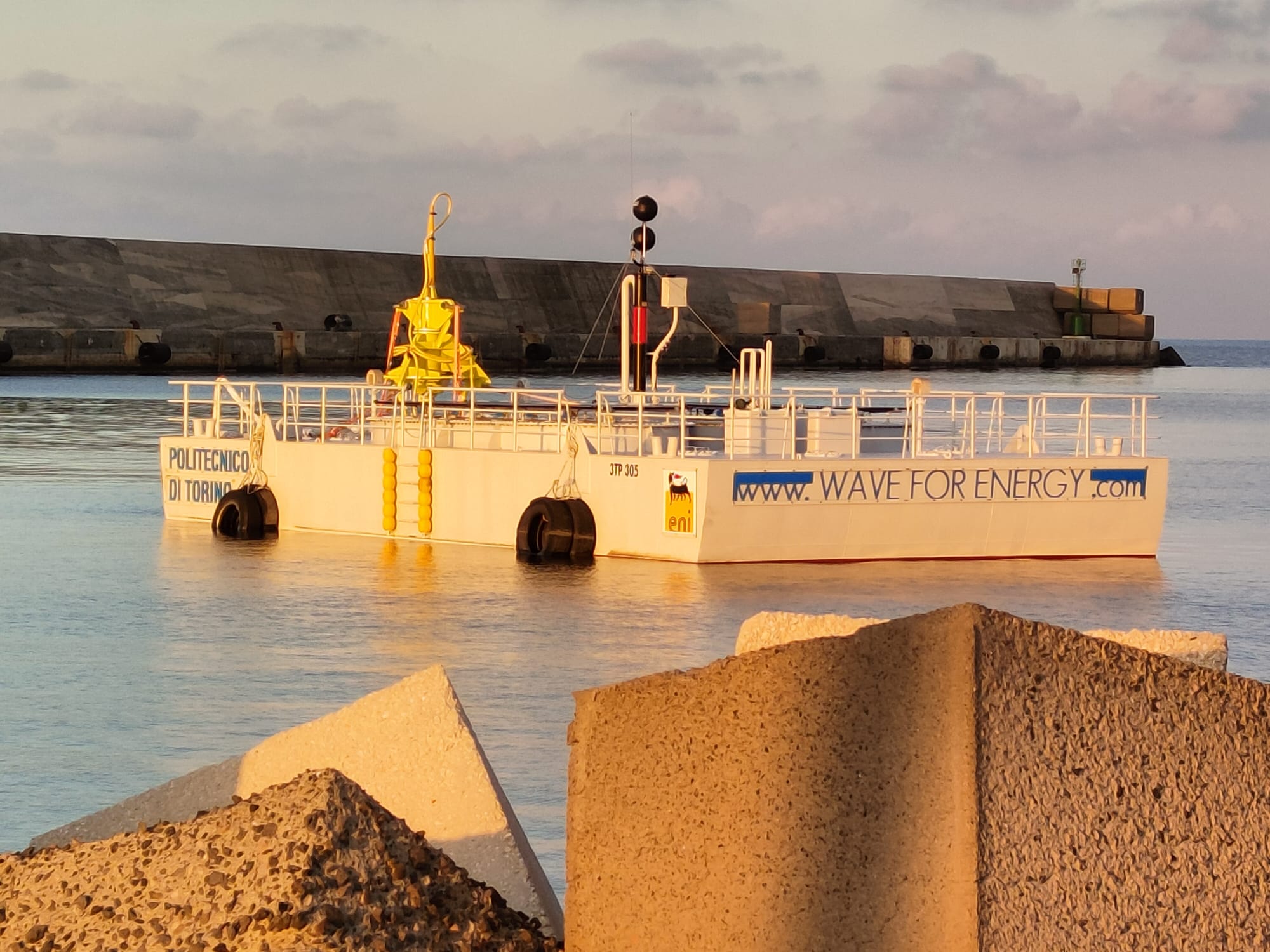
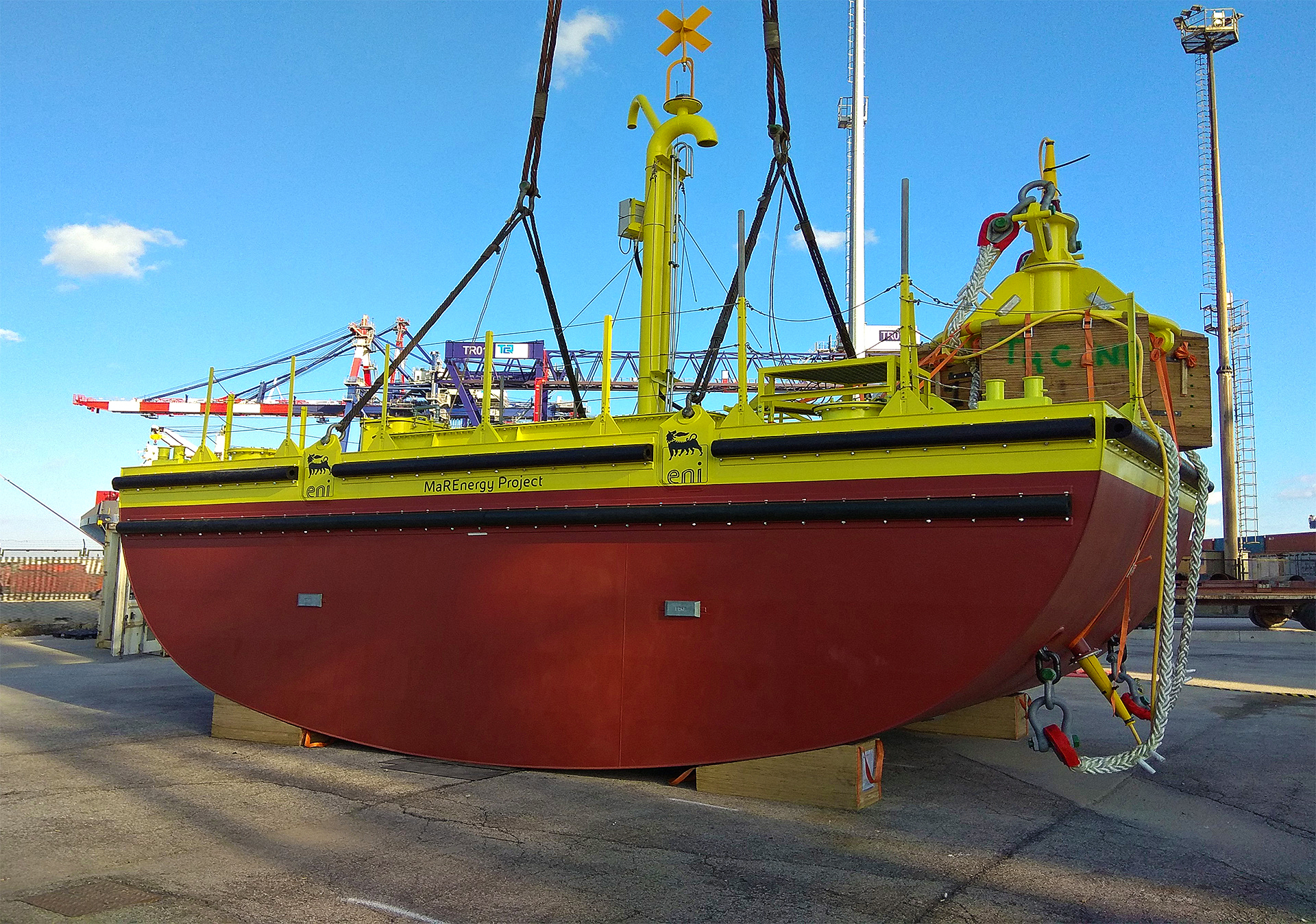
In March 2019, Wave for Energy, Eni, and the Politecnico di Torino deployed a new ISWEC prototype in the Adriatic Sea off Ravenna. The operation marked the first integration of the inertial wave energy converter into Eni’s offshore test area and hybrid smart-grid concept, linking wave production with photovoltaic generation and storage. For our company, it was the moment laboratory-scale innovation met industrial offshore logistics: towing, mooring, grid interfaces, and safety protocols had to work together on the first attempt.
Project background
Collaboration accelerated after Eni, Cassa Depositi e Prestiti, Terna, and Fincantieri announced plans to industrialise wave energy technologies, building on research originating in the MORE Lab at Politecnico di Torino. Wave for Energy, the university spin-off, led fabrication and sea trials while Eni provided the offshore site, integration expertise, and pathway toward using mature platforms as renewable energy hubs.
Eni’s January 2020 press release on the renewed alliance with Politecnico noted that ISWEC had been operating offshore Ravenna since March 2019, exceeding 50 kW of nominal power and demonstrating adaptive control across varying sea states. Those figures validated the gyroscopic architecture’s ability to tune itself without exposing submerged moving parts to seawater.
How the Ravenna prototype works
The device resembles a large floating buoy—approximately 5 m by 10 m on deck, with several metres of draft—containing two gyroscopic groups on single-degree-of-freedom mounts connected to electric generators. Waves induce pitch motion; the gyroscopes resist that motion and convert mechanical energy into electricity. A slack mooring lets the hull weathervane within limits defined by the mooring spread, reducing loads compared with fixed tidal structures.
Active control adjusts flywheel speed and generator torque using wave forecasts and onboard measurements. Keeping conversion machinery inside a sealed hull simplifies maintenance and reduces biofouling impacts on power take-off components—a design choice particularly relevant for the moderate but corrosive conditions of the Adriatic.
Hybrid grid integration
Ravenna is not an isolated island trial; ISWEC feeds a hybrid system combining wave, solar, and battery storage managed within Eni’s Central Northern District infrastructure. Hybridisation smooths production profiles: waves continue at night when photovoltaic output drops, while batteries cover short lulls. For offshore oil and gas assets considering electrification, such layouts illustrate how multiple renewable streams can share export capacity and control systems.
Eni has publicly discussed repurposing decommissioned offshore structures as renewable generation hosts. ISWEC’s relatively compact footprint and mooring-based installation are compatible with that vision, avoiding new fixed jackets solely for wave capture.
Deployment logistics
Sea deployment required coordination with Remacut and other industrial partners involved in the Ravenna project chain. Lessons included transport from fabrication yards, wet-towing in weather windows, and hook-up to pre-laid mooring components. Weather delays—familiar from subsequent Pantelleria campaigns—underscore that marine energy schedules must track marine forecasts, not only factory readiness.
Commissioning focused on verifying gyroscopic start-up sequences, fail-safe braking during extreme sea states, and grid-code compliance for power export. Resistive load banks were available if grid permissions lagged, mirroring procedures used in Sicily years earlier.
Results and follow-on work
Operational data from Ravenna informed design changes for higher-rated machines, including the 260 kW-class unit later installed off Pantelleria. Performance monitoring quantified capture width across sea states, guiding genetic-algorithm optimisation run on Eni’s HPC systems. Publications from Politecnico researchers continue to analyse control strategies using full-scale measurements rather than tank tests alone.
For Wave for Energy, Ravenna proved the industrial partnership model: university spin-off agility plus corporate offshore execution. It also set expectations for environmental monitoring—routine inspections, marine growth management, and coordination with local authorities on navigation safety around the test site.
Environmental and regulatory context
Italian offshore test sites must align with national maritime spatial planning and environmental impact procedures. Ravenna’s proximity to existing energy infrastructure simplified some surveys, but noise, electromagnetic emissions, and navigation marking still required approval from coastal authorities. Documenting compliance early helped shorten iterations when Pantelleria permits were prepared years later.
Monitoring included routine inspection of mooring lines, anodes, and hull coatings—standard offshore asset management tasks that wave energy developers must budget alongside PTO innovation. Sharing those O&M records with insurers is increasingly part of raising project finance.
What comes next
The Adriatic prototype remains a reference installation for hybrid offshore renewables in Italy. Future work targets cost reduction through modular gyroscope units, streamlined moorings, and serial manufacturing partnerships. As EU ocean energy capacity slowly grows, demonstrated reliability at Ravenna supports grant applications and offtake discussions for island and offshore niches where levelised cost thresholds are higher than on mainland markets.
Wave for Energy continues to translate Ravenna datasets into design rules for mooring loads, peak torque limits, and grid-friendly ramp rates—parameters that rarely appear in academic papers but dominate real project schedules.
Training programmes for technicians now include Ravenna checklists as core curriculum, ensuring new hires understand both the physics of gyroscopic capture and the practical steps for safe restart after storm shutdowns—a combination that defines mature ocean energy organisations.
Eni’s 27 March 2019 press release highlighted peak output above 51 kW—about 103% of nominal rating—during early operation, confirming that the Adriatic resource, though modest compared with Atlantic sites, can still drive full-scale PTO systems to rated performance when control and mooring design are site-tuned.
Sources
Eni — Eni starts wave power energy generation at the Ravenna offshore site (27 March 2019). Type: corporate press release.
Eni — Eni and the Politecnico di Torino: a renewed alliance for the use of marine energy resources (13 January 2020). Type: corporate press release.
Eni — The Energy that comes from the Sea: Politecnico di Torino and Eni launch the joint research laboratory (September 2020). Type: corporate press release.
Wave for Energy — New ISWEC Prototype Deployed in the Adriatic Sea for Eni (27 March 2019, original announcement). Type: company news archive.